Gardening Services in Southgate for tidy, usable outdoor spaces

Gardening Services Southgate supports household gardens and shared outdoor areas with practical, well-planned maintenance, clearance and improvement work. Our service focuses on keeping planting, grassed areas, hedges and borders in order, while also helping with larger seasonal tasks when a garden needs more than routine attention. If you want a straightforward way to keep an outdoor space manageable, we can help you plan what needs doing and how best to approach it.
We cover regular garden maintenance and one-off work, including cutting back growth, tidying borders, reducing overgrowth and dealing with waste that has built up over time. For some gardens, the right answer is a light maintenance visit; for others, the work may begin with clearance before moving into ongoing care. The aim is simple: leave the space safer, clearer and easier to enjoy.
Our approach is practical and measured. We look at the condition of the outdoor area, the access available and the type of work needed, then shape the job accordingly. That might mean trimming a hedge line, restoring a lawn edge, removing unwanted garden debris or combining several tasks into one visit. If you are comparing options, our services overview gives a clear starting point. Ask for a quotation when you are ready to discuss your garden.
Regular garden maintenance that keeps things under control
Routine maintenance is often the most effective way to stop a garden becoming difficult to manage. We can support beds, paths, lawns and planted areas with practical upkeep that fits the condition of the space. That may include cutting back soft growth, removing small amounts of stray vegetation, neatening edges and keeping problem areas from spreading. The work can be scaled to suit a compact front garden, a larger rear garden or a shared outdoor area that needs consistent attention.
When maintenance is planned sensibly, it becomes easier to keep on top of both appearance and structure. Lawns are easier to manage when they are cut at appropriate intervals, and borders stay more coherent when unwanted growth is dealt with before it dominates. Where helpful, we can combine several routine tasks in a single visit so the space receives a more balanced level of care. If you already know the main tasks, our garden maintenance page is a useful place to begin.
Useful maintenance work often includes:
- grass cutting and edging
- light pruning and cutting back
- border tidying and weed reduction
- leaf and light debris removal
- general seasonal garden neatness
Garden clearance for overgrown or cluttered spaces

When a garden has become too full of cuttings, broken items or uncontrolled growth, clearance can restore order quickly. We handle overgrown sections carefully, removing unwanted material from borders, paths and corners so the area becomes easier to use and maintain. Clearance work is often the first stage before any regular gardening programme can begin, especially where access is limited or plant growth has been left to spread for a while.
Clearance may also be useful after a period of non-use, during a property change or before the space is handed over to someone else. Our focus is on removing the material that is making the garden harder to manage, while keeping the work controlled and tidy. Where the job involves mixed waste or a wide variety of garden debris, we separate practical tasks so the site is left in a better condition than we found it. You can read more on our garden clearance page.
Two helpful points before any clearance job are access and scope. If we know which areas are most congested, what needs removing and whether there are delicate plants to preserve, the work can be organised more accurately. It also helps to understand whether you want a full clear, a partial tidy or a clearance that leads into ongoing maintenance. Clear instructions at the start save time later, especially where a garden contains a mix of living growth and loose debris.
Hedge trimming and controlled cutting back
Hedges need regular attention if they are to stay neat, even and well-shaped. Our hedge trimming work is suited to boundary hedges, dividing hedges and decorative sections that have begun to lose their shape. Trimming can improve light, define edges and stop growth from becoming awkward around paths, fences and neighbouring spaces. For many properties, hedge work is as much about structure as appearance, because a well-managed line supports the whole garden.
Different hedges need different handling. Some respond well to a light and regular trim, while others require a more deliberate reduction to bring them back within limits. We can also work around mixed planting so that the hedge is shaped without damaging nearby shrubs or beds. If your garden has several woody plants that all need attention, the best result may come from combining hedge work with broader maintenance rather than treating each feature in isolation. See our hedge trimming service for a closer look.
Where hedges have grown beyond their intended line, timing and consistency matter. Cutting too much at once can leave gaps or expose parts of the plant that were not ready for heavy reduction. For that reason, a careful approach is often better than an aggressive one. We aim to leave a result that looks balanced and is easier to keep in shape during the next round of routine care.
Lawn mowing and edging for cleaner outdoor surfaces
A well-kept lawn gives a garden a clearer layout and makes the whole space feel more intentional. Our lawn mowing work is suitable for regular upkeep and for restoring grass that has started to lose its shape. Alongside mowing, edging can sharpen the boundary between lawn, path and border so the finish looks deliberate rather than unfinished. This is especially helpful where the grass blends into planting or where the edges have become soft over time.
Grass care is rarely just about height. The condition of the lawn, the growth pattern and the surrounding features all influence the finish. A lawn that is mown consistently is easier to keep even, while one that has been neglected may need a more careful first cut and some added tidying around the edges. If the lawn is part of a wider garden refresh, it often makes sense to include border work and light clearance at the same time. Our lawn mowing page explains the core service in more detail.
For many customers, the value lies in making the garden feel orderly without turning it into a major project. Regular mowing can be one of the simplest ways to improve the look and use of an outdoor space, particularly when matched with sensible edging and the removal of clippings. A neat lawn gives the rest of the garden a better frame.
Landscape gardening for changes that improve layout and use

Some gardens need more than maintenance. Landscape gardening can help reshape the way a space works by improving its structure, defining areas more clearly or creating a more practical layout. That may involve changing bed lines, adapting hard and soft surfaces, or planning a tidier relationship between lawn, planting and access routes. The right changes can make a garden easier to look after and more comfortable to use.
We can support modest landscape gardening tasks where the aim is improvement rather than total redesign. A project might begin with clearing a section, then move into new planting spaces, adjusted borders or other features that bring more order to the outdoor area. Because every site has different constraints, it is sensible to treat design, access and maintenance together. If you are thinking about a change of layout, our landscape gardening page is a good place to start.
In practical terms, landscape gardening works best when the plan is realistic for the site. A strong layout should leave room for movement, maintenance and the plants themselves. It should also fit the scale of the property rather than trying to force in features that are difficult to care for. Small, well-chosen changes often deliver more lasting value than a large but awkward redesign.
Why clear planning matters before any larger garden work
Before a bigger project begins, it helps to decide what the main purpose of the garden should be. Some spaces need a cleaner appearance, while others need better access, stronger boundaries or a simpler layout. When those priorities are clear, it becomes easier to choose between targeted improvement, clearance or repeated maintenance. That is why we encourage customers to think in terms of outcomes rather than isolated tasks.
If you are preparing an enquiry, it is usually enough to note the main features of the garden, the areas that feel most problematic and any parts you want preserved. Photographs can help where the site is hard to describe, but the most useful information is the practical detail: what is overgrown, what should remain and whether the job is one-off or ongoing. A pricing and quotes page can also help you understand how quotations are approached.
Clear planning does not need to be complicated. A short description of the garden, plus any access limits or preferred timings, is often enough to begin. Keep the brief simple, then let the work be shaped around the actual condition of the space rather than assumptions. That gives a more reliable basis for a quotation and a better fit between the work and the site.
Landscaping support that connects the garden to the property
Landscaping work can change how an outdoor space sits alongside the property itself. That may involve making entrances easier to approach, balancing planted and open areas, or adjusting garden features so they feel more coherent together. In many gardens, the goal is not to create a dramatic transformation but to improve how the space functions day to day. We can support those kinds of changes with practical, carefully planned work.
Where the layout already works fairly well, smaller landscaping tasks may be enough. These can include reshaping borders, refreshing worn areas or altering how different parts of the garden relate to each other. If you need a broader combination of tasks, it may be sensible to combine landscaping with regular maintenance so the result holds together over time. Our landscaping page provides a useful route into that service.
Good landscaping should be guided by how the garden will actually be used. A seating area, planted edge or open stretch of lawn all serve different purposes, and the design should respect that balance. We aim to keep the work practical, tidy and aligned with the condition of the site, rather than overcomplicating the result with unnecessary additions.
About Southgate
Southgate is a north London district in the London Borough of Enfield, centred around Southgate Circus and the busy corridor of roads that connect it with nearby parts of the borough. The area developed significantly with the spread of the Metropolitan Railway and later suburban rail and Underground links, which helped shape its residential character during the late nineteenth and early twentieth centuries. Much of Southgate is known for its suburban streets, interwar housing and a layout that mixes local shopping frontages with quieter residential roads. The district also contains notable examples of twentieth-century architecture, including civic and commercial buildings around the central crossroads and a number of carefully planned estates that reflect different phases of London suburban growth. Nearby green spaces and tree-lined roads contribute to its local identity, while the wider borough provides parks, schools and community facilities that support everyday life. The area also has a strong sense of continuity through its long-established place name, which appears in local institutions, transport references and civic history. Although Southgate is part of a much larger city, it retains a recognisable centre and a clearly defined suburban atmosphere shaped by transport links, local services and residential development over time.
Seasonal gardening and the practical jobs that build up

Gardens change with the seasons, and some tasks only really make sense at certain times of year. Seasonal gardening can include cutting back after active growth, clearing fallen leaves, reducing overextended plants and bringing borders back into shape once the weather turns. In many cases, the most useful work is the kind that removes friction from the garden, making it simpler to maintain as conditions change.
Because seasonal work is often a mix of different small jobs, it helps to organise it as one clear visit rather than a collection of unrelated errands. We can combine tidy-up work with hedge trimming, grass care or clearance where that is the most practical way to restore order. When you are comparing options, think about the garden as a whole: a sensible seasonal visit should leave less to catch up on later. For broader support, our garden maintenance service can be paired with one-off seasonal tasks.
Simple maintenance usually lasts longer when the garden is approached in a calm, structured way. That means removing what no longer helps the space, shaping what remains and avoiding unnecessary disruption to healthy plants. Seasonal jobs should make the next stage of care easier, not create extra work by disturbing the structure of the garden.
Tree lopping and removal when woody growth needs attention
Some gardens include trees that need more than a light trim. Tree lopping and removal may be considered where branches are becoming awkward, growth is out of proportion to the space, or a tree is no longer suitable in its current position. The work has to be handled with care so the remaining garden features are protected and the area is left orderly once the task is complete.
Not every situation calls for removal. In some cases, selective lopping is enough to improve shape, reduce heaviness or help the tree sit better within the garden. In other cases, the safest or most practical answer may be removal, particularly where the tree has become unmanageable or is interfering with other parts of the site. If this is the sort of work you need, our tree lopping and removal page gives a direct starting point.
Because woody growth can affect boundaries, light and access, it is useful to think through the end result before the work begins. A good tree job should not simply cut material away; it should leave the space more coherent and easier to maintain. The same careful thinking also applies to waste handling, so the garden is not left with additional debris after the main work is finished.
Working with waste, access and quotation details
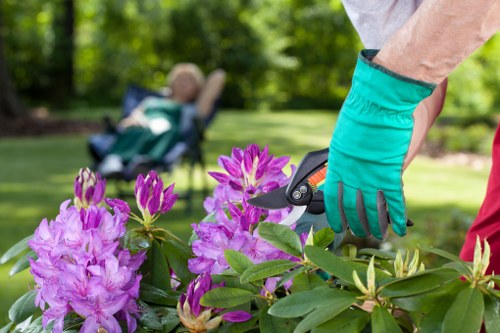
Garden work often produces material that has to be gathered, loaded and removed as part of the same visit. That may include cuttings, grass, branches, leaves or loose debris from clearance and maintenance work. The process is easier when access is understood in advance, especially if tools, waste bags or larger items need to pass through narrow side returns, shared spaces or restricted entries. In that sense, organisation is part of the service rather than an afterthought.
It also helps to be clear about what the garden contains before the work starts. A concise description of the area, the type of growth involved and the result you want can make a quotation more accurate. If the site includes mixed tasks, such as a hedge that needs trimming alongside a patch that needs clearing, it is usually better to mention everything together so the work can be planned in a sensible order. For further information, our contact us page is the place to begin.
Whether the job is simple or more involved, we aim to keep the process straightforward: identify the work, agree the scope and carry it out in a tidy, practical way. If you are ready to move forward, request a quotation today and we will help shape the right approach for your garden.